Books & Writing
The Collections
Deep Breaths of the Inanimate
In this captivating collection, readers embark on a journey through the ex- traordinary yet everyday lives of characters who traverse unexpected and uncharted paths, each story a vivid exploration of the human experience, driven by the emotion and desire that resonate deeply within us all. A new-born, fragile and innocent, is dramatically entrusted to the merciless waves of the sea. Three women find themselves ensnared by relics from their pasts— objects gifted by former lovers-that bind them in ways they cannot escape, challenging their identities and futures. The struggles of an imprisoned refugee unfold in a gripping tale of resilience in the face of despair, where hope flickers like a distant star. A lottery winner, basked in the glow of fortune, faces the harsh reality of loss as her life crumbles in ways she never anticipated. And a grieving son delves into the hidden truths of his mother's tumultuous past, uncovering secrets that reshape his understanding of family and legacy. These are just a few of the eclectic and offbeat tales woven together in Deep Breaths of the Inanimate, each revealing the intricacies of love, loss, and the unpredictable nature of existence, leaving readers to reflect on the profound impact of choices and the paths we walk in search of meaning and connection. .
Bryan R. Monte
Susan E. Lloy’s Deep Breaths of the Inanimate
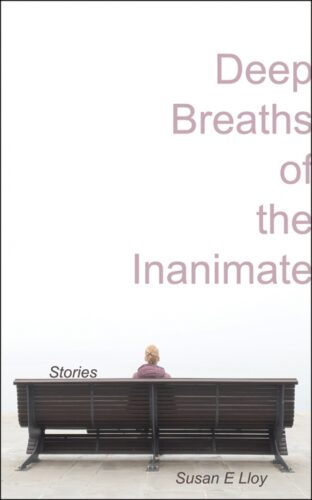
Regular readers of Amsterdam Quarterly’s reviews know that I am just as interested in a new book’s cover as its text. I believe this is what first draws in most readers (if they haven’t been fortunate to read a review beforehand). Susan E. Lloy’s latest book, Deep Breaths of the Inanimate, cover by Warthog Designs, features a woman, photographed from behind, with braided blonde hair, wearing a dark pinkish parka, sitting on an old, wooden bus or railway station bench. She is a woman at the beginning or end of a journey, a good visual and apt literary metaphor for the point of departure in Lloy’s new set of 16 stunning short stories.
And do her characters travel: either physically or mentally to a Zurich bar and casino or the tinder-dry Canadian countryside, or meditating on touchstones of past lovers, we are privy to what most are thinking. Deep Breaths is Lloy’s best short story collection yet due to its variety of characters, conflicts, settings, and narrative styles such as science-fiction, Gothic tale within a tale, and multiple perspective stories.
To give an idea of the variety of Lloy’s characters, their conflicts or emotional journeys, I will mention only some of Deep Breaths cast of quirky characters in this book’s first half. In the title story, two or three women muse over three objects that are related to their relationships with three men: a painting, a lighter, a clock. Years later, each object and the memories it evokes still moves the women so much, that they can’t bear to discard them. In ‘Rabbit Fever’, Sadie Rayburn, a Canadian Parliament legislative assistant, loses her job when a video of her as a stripper in her college years appears online. Sally leaves Ottawa and buys a convenience store in an Ontario tourist town. This storyline also morphs even further from conventional to science fiction mode due an outbreak of genetically altered rabbits who bite the locals and make them fall in love. In ‘Girls Only’, an older woman decides to move into a three-storey house of younger women in Halifax, Nova Scotia. While living there, she discovers and becomes obsessed by a Gothic style journal purported to have been written by a young woman held captive by her paranoid aunt who was also held hostage by her aunt. ‘Fixed for Life’ is about Rafael, an abused 18-year-old son, who dreams of a good life someday somewhere else instead of the cold, impoverished one he shares with his alcoholic, gambler mother. However, when his mother finally does hit the jackpot and she offers to share her winnings with him, Raphael leaves and taking all put $5,000 with him. ‘That Was Then’ is a tale of a semi-closeted, gay Quebecer, Bobi Jones, who discovers his recently deceased, pudgy, homemaker, single mother financed her life, before he was born, as a sex worker. Bobi also finds a clue to his unknown father. ‘All In’ is the story of two people—one a female, compulsive gambler, who is dangerously deep in debt, and the other, an older widower, whose only son committed suicide, who meet one evening in Zurich bar and start to have second thoughts about their euthanasia appointment the next day.
One outstanding aspect of Lloy’s characters is their courage (or lack of) to strike out (literally and figuratively) in new directions. ‘She’ is story told from a multi-perspective point of view. It includes the voices of immigrant women in their new countries, some haunted by memories of former lands while living in new ones, others by the loss of a children who disappeared during their migration, and still others who feel they are living neither in a new country, nor an old one, but somewhere in between.
Another of Lloy’s narrative strengths is creating vivid settings. Whether she is describing a character in the grim and noisy bustle of New York City’s Greenwich Village, a quiet, neat, townhouse district in Montreal, the tinder-dry Canada countryside, or a Neapolitan neighbourhood’s narrow streets, she places her characters firmly there and takes the reader with her. Whatever the setting, Lloy’s stories are fresh and peopled by fully-rounded characters, in original conflicts, who sometimes make surprising choices.
In addition, Lloy’s narrative frequently employs intriguing, open-ended stories that make the reader (at least this reader) continue to wonder and care about her characters long after these stories have ended. For example, does Jones in ‘That Was Then’ find out that his mother’s, former-life, ‘manager’ is his father? Does Raphael, who tells his Neapolitan girlfriend’s relatives that he was raise in an orphanage, ever come clean? Does the woman, who turned her phone off after she received messages from the hospital in ‘Turn Left on California’, find out she has cancer? And finally, is the nameless city-girl protagonist who moved to the countryside to stretch her meagre retirement savings in ‘Time Out’, able to thumb a ride out an approaching forest fire in time before she and the tinder-dry, climate change scenery are engulfed in flames? The endings of these stories kept me wondering about the fate of all four characters long after the words on the page had ended.
Each of Deep Breaths stories feels authentic, peopled by characters’ with believable interests, addictions, and sexual preferences, and activities involved in unusual conflicts. (And I’ve only mentioned half of them). These stories are suspenseful: each character’s conflicts are clear, but how they will or won’t not solve their personal dilemmas (or dig their graves even deeper) is not apparent until the very end. In addition, as mentioned above, Lloy’s stories sometimes don’t include standard denouements or resolutions.
Whether they are starting out, starting over, midway, or have reached the end of the line, Lloy’s masterful cast of characters and their conflicts are unique, engaging, quirky, and sometimes surprising. Deep Breaths of the Inanimate will interest everyone and it is unquestionably Lloy’s best work yet. I couldn’t put the book down.
AQ
Susan E. Lloy’s Deep Breaths of the Inanimate
Regular readers of Amsterdam Quarterly’s reviews know that I am just as interested in a new book’s cover as its text. I believe this is what first draws in most readers (if they haven’t been fortunate to read a review beforehand). Susan E. Lloy’s latest book, Deep Breaths of the Inanimate, cover by Warthog Designs, features a woman, photographed from behind, with braided blonde hair, wearing a dark pinkish parka, sitting on an old, wooden bus or railway station bench. She is a woman at the beginning or end of a journey, a good visual and apt literary metaphor for the point of departure in Lloy’s new set of 16 stunning short stories.
And do her characters travel: either physically or mentally to a Zurich bar and casino or the tinder-dry Canadian countryside, or meditating on touchstones of past lovers, we are privy to what most are thinking. Deep Breaths is Lloy’s best short story collection yet due to its variety of characters, conflicts, settings, and narrative styles such as science-fiction, Gothic tale within a tale, and multiple perspective stories.
To give an idea of the variety of Lloy’s characters, their conflicts or emotional journeys, I will mention only some of Deep Breaths cast of quirky characters in this book’s first half. In the title story, two or three women muse over three objects that are related to their relationships with three men: a painting, a lighter, a clock. Years later, each object and the memories it evokes still moves the women so much, that they can’t bear to discard them. In ‘Rabbit Fever’, Sadie Rayburn, a Canadian Parliament legislative assistant, loses her job when a video of her as a stripper in her college years appears online. Sally leaves Ottawa and buys a convenience store in an Ontario tourist town. This storyline also morphs even further from conventional to science fiction mode due an outbreak of genetically altered rabbits who bite the locals and make them fall in love. In ‘Girls Only’, an older woman decides to move into a three-storey house of younger women in Halifax, Nova Scotia. While living there, she discovers and becomes obsessed by a Gothic style journal purported to have been written by a young woman held captive by her paranoid aunt who was also held hostage by her aunt. ‘Fixed for Life’ is about Rafael, an abused 18-year-old son, who dreams of a good life someday somewhere else instead of the cold, impoverished one he shares with his alcoholic, gambler mother. However, when his mother finally does hit the jackpot and she offers to share her winnings with him, Raphael leaves and taking all put $5,000 with him. ‘That Was Then’ is a tale of a semi-closeted, gay Quebecer, Bobi Jones, who discovers his recently deceased, pudgy, homemaker, single mother financed her life, before he was born, as a sex worker. Bobi also finds a clue to his unknown father. ‘All In’ is the story of two people—one a female, compulsive gambler, who is dangerously deep in debt, and the other, an older widower, whose only son committed suicide, who meet one evening in Zurich bar and start to have second thoughts about their euthanasia appointment the next day.
One outstanding aspect of Lloy’s characters is their courage (or lack of) to strike out (literally and figuratively) in new directions. ‘She’ is story told from a multi-perspective point of view. It includes the voices of immigrant women in their new countries, some haunted by memories of former lands while living in new ones, others by the loss of a children who disappeared during their migration, and still others who feel they are living neither in a new country, nor an old one, but somewhere in between.
Another of Lloy’s narrative strengths is creating vivid settings. Whether she is describing a character in the grim and noisy bustle of New York City’s Greenwich Village, a quiet, neat, townhouse district in Montreal, the tinder-dry Canada countryside, or a Neapolitan neighbourhood’s narrow streets, she places her characters firmly there and takes the reader with her. Whatever the setting, Lloy’s stories are fresh and peopled by fully-rounded characters, in original conflicts, who sometimes make surprising choices.
In addition, Lloy’s narrative frequently employs intriguing, open-ended stories that make the reader (at least this reader) continue to wonder and care about her characters long after these stories have ended. For example, does Jones in ‘That Was Then’ find out that his mother’s, former-life, ‘manager’ is his father? Does Raphael, who tells his Neapolitan girlfriend’s relatives that he was raise in an orphanage, ever come clean? Does the woman, who turned her phone off after she received messages from the hospital in ‘Turn Left on California’, find out she has cancer? And finally, is the nameless city-girl protagonist who moved to the countryside to stretch her meagre retirement savings in ‘Time Out’, able to thumb a ride out an approaching forest fire in time before she and the tinder-dry, climate change scenery are engulfed in flames? The endings of these stories kept me wondering about the fate of all four characters long after the words on the page had ended.
Each of Deep Breaths stories feels authentic, peopled by characters’ with believable interests, addictions, and sexual preferences, and activities involved in unusual conflicts. (And I’ve only mentioned half of them). These stories are suspenseful: each character’s conflicts are clear, but how they will or won’t not solve their personal dilemmas (or dig their graves even deeper) is not apparent until the very end. In addition, as mentioned above, Lloy’s stories sometimes don’t include standard denouements or resolutions.
Whether they are starting out, starting over, midway, or have reached the end of the line, Lloy’s masterful cast of characters and their conflicts are unique, engaging, quirky, and sometimes surprising. Deep Breaths of the Inanimate will interest everyone and it is unquestionably Lloy’s best work yet. I couldn’t put the book down.
AQ
Nothing Comes Back
Age is the great divider. One side fused of fire and lust, the other undetected like fallout. The characters in this collection have been plucked and blown through time like pollen on the wind, often rooting themselves in foreign landscapes both beautiful and adverse, sometimes altered, yet always unyielding, ripe for transformation. Nothing Comes Back is a deeply captivating collection by a major literary talent working at the top of her craft.
NOTHING COMES BACK
STORIES
by Susan E. Lloy ‧ RELEASE DATE: April 15, 2023
Quietly absorbing stories with a superlative cast of characters. Characters start life anew or find themselves anchored by the past in Lloy’s short story collection.
STORIES
by Susan E. Lloy ‧ RELEASE DATE: April 15, 2023
Quietly absorbing stories with a superlative cast of characters. Characters start life anew or find themselves anchored by the past in Lloy’s short story collection.
Frequent AQ contributor Susan E. Lloy’s short story collection, Nothing Comes Back, provides a dark, sometimes humorous, look at the Sid-Vicious-and-Nancy, baby bust generation as they struggle with insufficient funds to cross the retirement finish line. Lloy’s stories have a unique mix of characters and conflicts sometimes including alternative sexual arrangements. These include polygamous Mormon soft-porn out West, the perils of a poorly-chosen Nova Scotian real estate nest egg, marital jealousy/infidelity, café and bar pickups, and mayhem on the high seas. Lloy’s stories are surprising and entertaining, many with unexpected twists and endings.
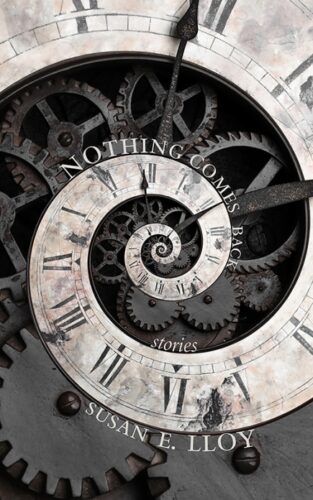
The cover of Nothing Comes Back features a clockface unwinding into a downward spiral, similar to some representations of Einstein’s concept of space-time. The first and title story of this collection is about Sybil, who ‘doesn’t have money socked away’ as some of her contemporaries do, for extensive travels, but enough socked away for one special trip.’ She travels out to the American West’s colourful canyons and river valleys. Then she wins and shortly thereafter loses big at a Nevada casino. Almost broke, she meets and falls in love with a man who turns out to be a Mormon polygamist, who persuades her to join his ‘big’ family. However, later she discovers that he has attempted to drain her remaining savings account without her permission. For the time, she decides to let it ride, plotting her next move, in typically Lloy narrative fashion, beyond the actual story.
Lloy’s stories’ characters, and their almost unbearable or impossible situations, are her narrative hallmark. Plot and nicely wrapped up endings in general are unreal in her fictional world. People striking out late in life on their own, with what little they’ve saved, finally pursuing their dreams, is commonplace.
Unconventional living situations, including polyandry, are common in Lloy’s stories due the protagonists a lack of money. In ‘The Wayward Collective’, a woman named Wanda finds herself taking in housemates to pay for her house’s renovations. Perry, ‘an artist who used to work with marble, but has recently changed to fiberglass resin, is taken in first for this money. Then Dot, when the plumbing goes bad and Japamala, ‘who has ‘spirited blue eyes’ and ‘travels the world visiting yoga retreats’. Lastly comes Ethan or ‘Taffy as he is often called, always tanned a creamy bronze the colour of the chewy candy.’ He ‘a former roofer, who uses a cane subsequent to a fall and who was on disability until his pension kicked in’. Everything starts out well: the house’s residents eat one communal meal together per week. However, with this batch of steamy characters, it’s hard not to predict the intramural action, rearrangements and falling outs that soon happen.
The cover of Nothing Comes Back features a clockface unwinding into a downward spiral, similar to some representations of Einstein’s concept of space-time. The first and title story of this collection is about Sybil, who ‘doesn’t have money socked away’ as some of her contemporaries do, for extensive travels, but enough socked away for one special trip.’ She travels out to the American West’s colourful canyons and river valleys. Then she wins and shortly thereafter loses big at a Nevada casino. Almost broke, she meets and falls in love with a man who turns out to be a Mormon polygamist, who persuades her to join his ‘big’ family. However, later she discovers that he has attempted to drain her remaining savings account without her permission. For the time, she decides to let it ride, plotting her next move, in typically Lloy narrative fashion, beyond the actual story.
Lloy’s stories’ characters, and their almost unbearable or impossible situations, are her narrative hallmark. Plot and nicely wrapped up endings in general are unreal in her fictional world. People striking out late in life on their own, with what little they’ve saved, finally pursuing their dreams, is commonplace.
Unconventional living situations, including polyandry, are common in Lloy’s stories due the protagonists a lack of money. In ‘The Wayward Collective’, a woman named Wanda finds herself taking in housemates to pay for her house’s renovations. Perry, ‘an artist who used to work with marble, but has recently changed to fiberglass resin, is taken in first for this money. Then Dot, when the plumbing goes bad and Japamala, ‘who has ‘spirited blue eyes’ and ‘travels the world visiting yoga retreats’. Lastly comes Ethan or ‘Taffy as he is often called, always tanned a creamy bronze the colour of the chewy candy.’ He ‘a former roofer, who uses a cane subsequent to a fall and who was on disability until his pension kicked in’. Everything starts out well: the house’s residents eat one communal meal together per week. However, with this batch of steamy characters, it’s hard not to predict the intramural action, rearrangements and falling outs that soon happen.
Vita
Angst, seduction, escape and extinction control these many tales— -a whisper in the ear convinces a lady to take the plunge, another to take up surfing, and a young man to jump in front of a moving train—and there is joy in settling a score with despised neighbours and a conspiracy under the California sun. Some sketches are laced with passion and loss—a son comes to know his mother from a series of letters following her death, while a face transplant changes a man's life, but with it comes the unwanted pursuit of the donors wife-while others show murderous aspirations and an irrepressible desire for re-lease. Always vital, Vita opens wide the windows into our many lives.
Bryan R. Monte
AQ25 Summer 2019 Book Reviews
Susan Lloy, Vita: Stories, Now or Never Publishing, ISBN 978-1-988098-76-0, 151 pages.
Jennifer Clark, A Beginner’s Guide to Heaven, Unsolicited Press, ISBN 978-1-974021-44-0, 124 pages.
Unexpectedly and delightfully, Amsterdam Quarterly received two outstanding books in the post, one fiction and one poetry collection, by past AQ contributors. I would like to pass these books onto AQ’s readers, without reservation, as worthwhile additions to their summer holiday reading lists.
Amsterdam Quarterly’s readers will find something both familiar and new in Susan Lloy’s most recent, short story collection, Vita: Stories. One thing that will be familiar is that four of this book’s stories, which were first published in AQ from 2015 to 2018. Whether Lloy is discussing struggling writers and real estate in Canada’s maritime provinces, the grittiness and the increasing cost of maintaining an urban space to live and write, mental health issues or her characters attempts at a life in Amsterdam, her situations and characters are always memorable.
In this collection’s first and title story, ‘Vita’, Lloy deftly describes the mind of a dying man, Arthur, who recollects revels and romance from decades ago, which he relives through medicated dreams. Arthur states somewhat disappointedly that the reported film that flashes before one’s eyes at the end of life is more like a reedit made ‘from scraps on the floor put back together with the plot and characters all mixed up in one last fusion.’ He has flashbacks of meeting women at concerts, ‘corrupted by percussion and screaming guitars,’ in his younger, wilder years, then comes back to the present and discovers soup left by his housekeeper, Hazel. Hazel also brings Arthur Berlin Alexanderplatz and ‘I, Claudius and all the Cassavette’s films, with sagas of murder, poison and treachery;’ at his request ‘to remember New York when it was down and dirty.’ And the story’s final paragraph which describes the man running through a field of red poppies, trying to catch a woman called Daleighla, as he feels ‘everything little piece of me making a break for parts unknown’ is one of the most subtle, yet powerful descriptions of dying I’ve ever read.
Vita also includes two stories about frustrated and financially strapped writers who have spent their life savings for a place of peace and quiet in the country, but don’t find it without doing things they wouldn’t normally do. In ‘That Screaming Silence’ Edie escapes from a noisy, working class, crime-ridden, neighbourhood in Montreal to the quiet Nova Scotian countryside to write. However, she soon discovers her anti-social, criminal neighbours constantly make noise playing music on boom boxes and/or repairing cars. In addition, under the cover of night, they dump waste on her property, which she doesn’t discover until spring when the snow melts. Edie tries to make peace with these neighbours, but they don’t change their noisy ways so, in the end, she is driven to take a desperate measure.
AQ25 Summer 2019 Book Reviews
Susan Lloy, Vita: Stories, Now or Never Publishing, ISBN 978-1-988098-76-0, 151 pages.
Jennifer Clark, A Beginner’s Guide to Heaven, Unsolicited Press, ISBN 978-1-974021-44-0, 124 pages.
Unexpectedly and delightfully, Amsterdam Quarterly received two outstanding books in the post, one fiction and one poetry collection, by past AQ contributors. I would like to pass these books onto AQ’s readers, without reservation, as worthwhile additions to their summer holiday reading lists.
Amsterdam Quarterly’s readers will find something both familiar and new in Susan Lloy’s most recent, short story collection, Vita: Stories. One thing that will be familiar is that four of this book’s stories, which were first published in AQ from 2015 to 2018. Whether Lloy is discussing struggling writers and real estate in Canada’s maritime provinces, the grittiness and the increasing cost of maintaining an urban space to live and write, mental health issues or her characters attempts at a life in Amsterdam, her situations and characters are always memorable.
In this collection’s first and title story, ‘Vita’, Lloy deftly describes the mind of a dying man, Arthur, who recollects revels and romance from decades ago, which he relives through medicated dreams. Arthur states somewhat disappointedly that the reported film that flashes before one’s eyes at the end of life is more like a reedit made ‘from scraps on the floor put back together with the plot and characters all mixed up in one last fusion.’ He has flashbacks of meeting women at concerts, ‘corrupted by percussion and screaming guitars,’ in his younger, wilder years, then comes back to the present and discovers soup left by his housekeeper, Hazel. Hazel also brings Arthur Berlin Alexanderplatz and ‘I, Claudius and all the Cassavette’s films, with sagas of murder, poison and treachery;’ at his request ‘to remember New York when it was down and dirty.’ And the story’s final paragraph which describes the man running through a field of red poppies, trying to catch a woman called Daleighla, as he feels ‘everything little piece of me making a break for parts unknown’ is one of the most subtle, yet powerful descriptions of dying I’ve ever read.
Vita also includes two stories about frustrated and financially strapped writers who have spent their life savings for a place of peace and quiet in the country, but don’t find it without doing things they wouldn’t normally do. In ‘That Screaming Silence’ Edie escapes from a noisy, working class, crime-ridden, neighbourhood in Montreal to the quiet Nova Scotian countryside to write. However, she soon discovers her anti-social, criminal neighbours constantly make noise playing music on boom boxes and/or repairing cars. In addition, under the cover of night, they dump waste on her property, which she doesn’t discover until spring when the snow melts. Edie tries to make peace with these neighbours, but they don’t change their noisy ways so, in the end, she is driven to take a desperate measure.
For today’s post, I read from Canadian author Susan E. Lloy‘s second collection, Vita, out in 2019 from Now or Never Publishing. This has been my first experience with LLoy’s writing, as I didn’t catch her first book, But When We Look Closer, and her work seems to have appeared exclusively in Candadian and European journals. What I love about Story366 is how it leads me to this kind of author, one I never would have encountered otherwise.
This is a rare occasion where I’m not covering the title story. “Vita” is the opener and is about Arthur, an older, infirmed guy who looks forward to visits from his sexy young nurse/caretaker, Hazel. She—and his morphine-type pain shot—inspires him to revisit his life as a photojournalist, as well as some surreal planes where he can assess his life, and his imminent death.
“Mama” is a flash piece, just a short paragraph, about a woman who sees her babies grow up, grow apart from her—rather maliciously—then find their way home.
I really like “The Little Bang,” about a middle-woman named Rose who begins the story thinking about the universe, the Big Bang, and various metaphysical consistencies within the universe. This leads into a meet-up with an ex, decades later, a man who broke her heart and happens to be in Canada (he’s Danish). She readies a dinner for him, and when he arrives, they get right down to it: Evaluating each other, catching each other up, and making some light accusations. Soon Rose is realizing that Gregor has grown soft and that she has only gotten better. When they inevitably hit the sack, Rose makes the titular analysis of Gregor’s prowess, bringing the story, and their reunion, to its end.
“Oh …” is about a former stripper and still-sometime escort named Annie who realizes that she’s aged out of that line of work, that she’s not going to be able to make enough money to live on very much longer. She visits a friend and former colleague, Vivian, who takes her to an adult movie set, where she’s evolved into someone behind the cameras, a more intellectual version of her former self, inspiring Annie to enter the next phase of her life.
Today I’m focusing on the longest story I read, “That Screaming Silence.” This one features Edie, a semi-successful poet who’s recently retired and moved out of the inner-city of Montreal to an isolated country house. She mostly buys the house online, but does make one visit before signing, finding the place to be charming and quiet. Since quiet is what she’s looking for, it’s perfect and she packs up for the last phase of her life.
Only when she gets there, she discovers that her neighbors, the Brodys, are a nightmare. The realtor who sold her the house did a sneaky job of covering up the fact that the Brodys are loud and obnoxious people, bent on making Edie’s life hell; it even comes out later that the realtor is a Brody cousin. They dump garbage on their property, garbage that spills onto Edie’s land, garbage like old furniture and a bag full of drowned puppies (!) that she has to pay someone to haul away. The adult sons constantly play loud music on a their “ghetto blaster,” and are revving the engines of loud machinery at all hours of the night. Worst of all, they have a flea-bitten dog tied up, a dog that barks and whimpers all day, which is both annoying and sad to Edie.
Edie starts her protest by complaining to friends and neighbors. Colleen, a local who walks her dog, agrees that it’s a shame, wondering why Edie ever bought the house, which had been on the market forever. Edie’s friend back in Toronto—who remembers Edie’s problems with her neighbors there, a hillbilly family who caused similar chaos (note: Montreal Hillbillies is the name of my next band). Eventually, Colleen just asks her why she doesn’t go over and talk to Maggi, the Brody matriarch, and reason with her. Edie agrees and heads over, bringing with her a coq au vin for good will.
I don’t want to reveal what happens when Edie visits the Brodys, as that would be revealing too much. But Edie is such a well drawn character, and very subtly, Lloy implies that maybe it’s not these noisy people who have the problem, who are the antagonists of this story.
Susan E. Lloy is particularly skilled at drawing characters in her stories in Vita. The plots are somewhat of a slow burn, not a lot of murders or car chases or the like, but certainly perpetrated by distinct, well rounded, and evolving characters. I liked meeting these people, seeing how they grew into their worlds. I enjoyed these stories today and am glad to have discovered this author.
This is a rare occasion where I’m not covering the title story. “Vita” is the opener and is about Arthur, an older, infirmed guy who looks forward to visits from his sexy young nurse/caretaker, Hazel. She—and his morphine-type pain shot—inspires him to revisit his life as a photojournalist, as well as some surreal planes where he can assess his life, and his imminent death.
“Mama” is a flash piece, just a short paragraph, about a woman who sees her babies grow up, grow apart from her—rather maliciously—then find their way home.
I really like “The Little Bang,” about a middle-woman named Rose who begins the story thinking about the universe, the Big Bang, and various metaphysical consistencies within the universe. This leads into a meet-up with an ex, decades later, a man who broke her heart and happens to be in Canada (he’s Danish). She readies a dinner for him, and when he arrives, they get right down to it: Evaluating each other, catching each other up, and making some light accusations. Soon Rose is realizing that Gregor has grown soft and that she has only gotten better. When they inevitably hit the sack, Rose makes the titular analysis of Gregor’s prowess, bringing the story, and their reunion, to its end.
“Oh …” is about a former stripper and still-sometime escort named Annie who realizes that she’s aged out of that line of work, that she’s not going to be able to make enough money to live on very much longer. She visits a friend and former colleague, Vivian, who takes her to an adult movie set, where she’s evolved into someone behind the cameras, a more intellectual version of her former self, inspiring Annie to enter the next phase of her life.
Today I’m focusing on the longest story I read, “That Screaming Silence.” This one features Edie, a semi-successful poet who’s recently retired and moved out of the inner-city of Montreal to an isolated country house. She mostly buys the house online, but does make one visit before signing, finding the place to be charming and quiet. Since quiet is what she’s looking for, it’s perfect and she packs up for the last phase of her life.
Only when she gets there, she discovers that her neighbors, the Brodys, are a nightmare. The realtor who sold her the house did a sneaky job of covering up the fact that the Brodys are loud and obnoxious people, bent on making Edie’s life hell; it even comes out later that the realtor is a Brody cousin. They dump garbage on their property, garbage that spills onto Edie’s land, garbage like old furniture and a bag full of drowned puppies (!) that she has to pay someone to haul away. The adult sons constantly play loud music on a their “ghetto blaster,” and are revving the engines of loud machinery at all hours of the night. Worst of all, they have a flea-bitten dog tied up, a dog that barks and whimpers all day, which is both annoying and sad to Edie.
Edie starts her protest by complaining to friends and neighbors. Colleen, a local who walks her dog, agrees that it’s a shame, wondering why Edie ever bought the house, which had been on the market forever. Edie’s friend back in Toronto—who remembers Edie’s problems with her neighbors there, a hillbilly family who caused similar chaos (note: Montreal Hillbillies is the name of my next band). Eventually, Colleen just asks her why she doesn’t go over and talk to Maggi, the Brody matriarch, and reason with her. Edie agrees and heads over, bringing with her a coq au vin for good will.
I don’t want to reveal what happens when Edie visits the Brodys, as that would be revealing too much. But Edie is such a well drawn character, and very subtly, Lloy implies that maybe it’s not these noisy people who have the problem, who are the antagonists of this story.
Susan E. Lloy is particularly skilled at drawing characters in her stories in Vita. The plots are somewhat of a slow burn, not a lot of murders or car chases or the like, but certainly perpetrated by distinct, well rounded, and evolving characters. I liked meeting these people, seeing how they grew into their worlds. I enjoyed these stories today and am glad to have discovered this author.
But When We Look Closer
Though But When We Look Closer is a collection of eighteen stories that approaches its subjects from a parade of landscapes, running through these tales is a singular motif-taking control. Characters find themselves in skins they wish to shed, with vices held close and with voices that must be heard. Whether it be seeking a life in a foreign land, lusting after a street junky, driving through the city with a gun or searching for buried treasure, But When We Look Closer offers a fascinating examination into the occupations and obsessions of those who walk beside us and live next door.
A review of But When We Look Closer by Susan E. Lloy
Published on July 27, 2017
In But When We Look Closer, her debut collection of eighteen short stories, Susan E. Lloy establishes a literary version of film noir, presenting us with characters whose suffering comes in many forms. In prose that fluctuates between stark and densely cinematic, Lloy explores the inner lives of the lost, the lonely, and the mentally ill. The majority of her narrators are women, but these are women as predators, as ambivalent mothers, as desperate junkies counting the minutes until their next fix.
The dark tone of the collection is set with the title story. Exhausted by their constant demands, single mother Gwendolyn sends her children out to play in a nor’easter with “hurricane-force winds and record amounts of snow.” The storm intensifies and the tension mounts as Gwendolyn spends the day drinking wine and brooding about her youthful dreams of “getting out of this place.” The vagaries of life have trapped her in Nova Scotia, where “plans evaporated like late morning fog on a warm day.” Long before she thinks to call the children back into the house, we suspect the tragedy about to unfold.
Their stories may be different, but many of Lloy’s characters follow the same paths in life, beginning in stifling small-town Nova Scotia, where “depression was something that came and went like the tides and bad weather” and characters gaze “into the cold, black water imagining every primal fear ready to break through the surface.” Some abandon the East coast and relocate to the big city of Montreal, with its seedy bars and its “balconies tattooed with roses.” There are also life-changing trips to Amsterdam, with its “small houses, complicated men and crowded squares full with tourists,” and post-industrial Berlin, “entrenched with attitude and edge,” where everyone “appeared to have heaps of money for fun, leisure and drugs.” Each of these four regions possesses its own centre of gravity, drawing characters back in search of how things used to be or how things should have been. The strongest of Lloy’s stories feature complex, energetic characters who transcend easy judgment. In “Even Sad Dogs Smile,” a young painter is diagnosed with schizophrenia but believes that she must choose between her medication and her creativity, while the fate of her adopted dog hangs in the balance. The darkly playful “Escape from Reform School” explores the allure of childhood games that grow more dangerous with each passing year, and “Bad Clock” is an unapologetic paean to the pleasures and dangers of cocaine: “It was always great in the beginning hours, but then the down came. Like the great force from an ocean wave that pins you against the bottom.”
At times, Lloy’s writing loses momentum, with certain stories becoming mired in repetitive sequences of events or stilted, unrealistic dialogue. But as a whole, the collection succeeds as a haunting series of portraits of characters mourning past lovers, past selves, and the ghosts of happiness.
mRb
Published on July 27, 2017
In But When We Look Closer, her debut collection of eighteen short stories, Susan E. Lloy establishes a literary version of film noir, presenting us with characters whose suffering comes in many forms. In prose that fluctuates between stark and densely cinematic, Lloy explores the inner lives of the lost, the lonely, and the mentally ill. The majority of her narrators are women, but these are women as predators, as ambivalent mothers, as desperate junkies counting the minutes until their next fix.
The dark tone of the collection is set with the title story. Exhausted by their constant demands, single mother Gwendolyn sends her children out to play in a nor’easter with “hurricane-force winds and record amounts of snow.” The storm intensifies and the tension mounts as Gwendolyn spends the day drinking wine and brooding about her youthful dreams of “getting out of this place.” The vagaries of life have trapped her in Nova Scotia, where “plans evaporated like late morning fog on a warm day.” Long before she thinks to call the children back into the house, we suspect the tragedy about to unfold.
Their stories may be different, but many of Lloy’s characters follow the same paths in life, beginning in stifling small-town Nova Scotia, where “depression was something that came and went like the tides and bad weather” and characters gaze “into the cold, black water imagining every primal fear ready to break through the surface.” Some abandon the East coast and relocate to the big city of Montreal, with its seedy bars and its “balconies tattooed with roses.” There are also life-changing trips to Amsterdam, with its “small houses, complicated men and crowded squares full with tourists,” and post-industrial Berlin, “entrenched with attitude and edge,” where everyone “appeared to have heaps of money for fun, leisure and drugs.” Each of these four regions possesses its own centre of gravity, drawing characters back in search of how things used to be or how things should have been. The strongest of Lloy’s stories feature complex, energetic characters who transcend easy judgment. In “Even Sad Dogs Smile,” a young painter is diagnosed with schizophrenia but believes that she must choose between her medication and her creativity, while the fate of her adopted dog hangs in the balance. The darkly playful “Escape from Reform School” explores the allure of childhood games that grow more dangerous with each passing year, and “Bad Clock” is an unapologetic paean to the pleasures and dangers of cocaine: “It was always great in the beginning hours, but then the down came. Like the great force from an ocean wave that pins you against the bottom.”
At times, Lloy’s writing loses momentum, with certain stories becoming mired in repetitive sequences of events or stilted, unrealistic dialogue. But as a whole, the collection succeeds as a haunting series of portraits of characters mourning past lovers, past selves, and the ghosts of happiness.
mRb
Susan Lloy’s But When We Look Closer is a collection of short stories that describes what happens when some druggy, former ’70s punkers are forced to move back home, to a rest home or other institutions for their own safety. These stories—the dark side of the Sid and Nancy generation—revolve around the subjects of sex, drugs, music, art, money, and mental illness. In addition, Lloy writes about people who are finally freed to pursue their artistic and erotic interests whether this be through finally having a permanent roof over their heads, receiving an inheritance or winning the lottery.
These stories, some no longer than a page, often have snap, but always credible endings. For example in “Where To,” a woman who takes a cab to a bar planning to kill her unfaithful lover. She decides not to, though, after a conversation with her Afghan cabbie, who describes how he ended up stranded up in a country, whose military accidentally killed his family. In “Dylan’s Roost” the young bookstore owner, whose shop provides a comfortable haven for both a rich author and a schizophrenic homeless man, is not rescued from financial peril due to his hard work or his good deeds. There is no karma, no payoff for good deeds, but plenty of financial practicalities in the Lloy’s fictional world.
The type of short stories I especially enjoy, those written about the same characters over a space of several decades, are also represented in this collection by “Close Kin” and “Dutch Lite.” In the first story, the main character, Margaret, then a twenty-something, an art school student, is involved in a three-way with Dutch twin brothers, Theo, a violinist, and Joop, an artist, in Amsterdam. She forms a formal relationship with one to stay in the Netherlands, but later their chaotic ménage trois, in which one man was like “the cold Atlantic greets the warm waters of the Indian ocean,” leads to a tearful breakup and Margaret handing her Dutch identity (indefinite stay) card to a Brussels’ airport customs official. Fast forward years later and in “Dutch Lite” Margaret has literally won the lottery and recently purchased a canal house in Amsterdam’s Jordaan district from where she can hear the Westerkerk’s chimes. However, as Thomas Wolff famously warned, “you can’t go home again,” and she finds her two previous lovers distant and in more permanent relationships than she had with them even though she offers them both space in her new home to practice music and paint with no strings attached. Her efforts to meet a new man also fail due to her being less than forthcoming about why she’s in Amsterdam, afraid her new beau might be attracted to her for just her money. When he also rejects her, she finally realises she, as many of her Lloy’s characters, can’t live in the past or, even with enough money, recreate it in the present.
The Canadian and Quebecois references in Lloy’s book also made it interesting to this American, permanent-resident of the Netherlands, who rarely ventured North of Niagara Falls. Lloy describes life in Canada’s French-speaking province and capital as well as its British maritime provinces. She describes apartments along Quebec’s grand avenues and her characters familiar, urban angst of having to look for flats after the buildings, in which they’ve lived for decades, go condo. Her stories set along the coast include those about recently deceased relatives and being party to the suicide of a terminally-ill, local fisherman and childhood friend. They are also about the relatives and friends who attend these funerals and/or spread their loved ones’ ashes along the shore where they will be near familiar rocky coasts and migratory whale routes.
Lloy’s description of mental illness, especially schizophrenia and its relationship to art, is also a distinctive feature of these stories. In “Even Sad Dogs Smile,” Lloy describes the “meds” that prevented Daleighla’s, her main character’s, schizophrenic episodes so she wouldn’t try to destroy the bathroom sink to stop the noise coming from its drain, but which also “clouded her head” so she could no longer create remarkable and edgy paintings and drawings. One episode is announced by her dog, Romeo, who suddenly says: “Give it over, you greedy, tight-fisted bitch,” as she offers him a piece of her sandwich. Tragically, after struggling for years to be represented by a gallery, just as she is accepted, she has another episode in which she destroys most of her work and when she comes back to herself, can’t create anything new that’s as good.
Lloy’s But When We Look Closer is a unique collection of short stories set in North America and Europe where her characters struggle with drugs, sex, art, money, mental illness and, most importantly, loss. As in life, so as in her fiction, Lloy’s characters discover too late that they can’t really change themselves, (even through plastic surgery,) or their past.
These stories, some no longer than a page, often have snap, but always credible endings. For example in “Where To,” a woman who takes a cab to a bar planning to kill her unfaithful lover. She decides not to, though, after a conversation with her Afghan cabbie, who describes how he ended up stranded up in a country, whose military accidentally killed his family. In “Dylan’s Roost” the young bookstore owner, whose shop provides a comfortable haven for both a rich author and a schizophrenic homeless man, is not rescued from financial peril due to his hard work or his good deeds. There is no karma, no payoff for good deeds, but plenty of financial practicalities in the Lloy’s fictional world.
The type of short stories I especially enjoy, those written about the same characters over a space of several decades, are also represented in this collection by “Close Kin” and “Dutch Lite.” In the first story, the main character, Margaret, then a twenty-something, an art school student, is involved in a three-way with Dutch twin brothers, Theo, a violinist, and Joop, an artist, in Amsterdam. She forms a formal relationship with one to stay in the Netherlands, but later their chaotic ménage trois, in which one man was like “the cold Atlantic greets the warm waters of the Indian ocean,” leads to a tearful breakup and Margaret handing her Dutch identity (indefinite stay) card to a Brussels’ airport customs official. Fast forward years later and in “Dutch Lite” Margaret has literally won the lottery and recently purchased a canal house in Amsterdam’s Jordaan district from where she can hear the Westerkerk’s chimes. However, as Thomas Wolff famously warned, “you can’t go home again,” and she finds her two previous lovers distant and in more permanent relationships than she had with them even though she offers them both space in her new home to practice music and paint with no strings attached. Her efforts to meet a new man also fail due to her being less than forthcoming about why she’s in Amsterdam, afraid her new beau might be attracted to her for just her money. When he also rejects her, she finally realises she, as many of her Lloy’s characters, can’t live in the past or, even with enough money, recreate it in the present.
The Canadian and Quebecois references in Lloy’s book also made it interesting to this American, permanent-resident of the Netherlands, who rarely ventured North of Niagara Falls. Lloy describes life in Canada’s French-speaking province and capital as well as its British maritime provinces. She describes apartments along Quebec’s grand avenues and her characters familiar, urban angst of having to look for flats after the buildings, in which they’ve lived for decades, go condo. Her stories set along the coast include those about recently deceased relatives and being party to the suicide of a terminally-ill, local fisherman and childhood friend. They are also about the relatives and friends who attend these funerals and/or spread their loved ones’ ashes along the shore where they will be near familiar rocky coasts and migratory whale routes.
Lloy’s description of mental illness, especially schizophrenia and its relationship to art, is also a distinctive feature of these stories. In “Even Sad Dogs Smile,” Lloy describes the “meds” that prevented Daleighla’s, her main character’s, schizophrenic episodes so she wouldn’t try to destroy the bathroom sink to stop the noise coming from its drain, but which also “clouded her head” so she could no longer create remarkable and edgy paintings and drawings. One episode is announced by her dog, Romeo, who suddenly says: “Give it over, you greedy, tight-fisted bitch,” as she offers him a piece of her sandwich. Tragically, after struggling for years to be represented by a gallery, just as she is accepted, she has another episode in which she destroys most of her work and when she comes back to herself, can’t create anything new that’s as good.
Lloy’s But When We Look Closer is a unique collection of short stories set in North America and Europe where her characters struggle with drugs, sex, art, money, mental illness and, most importantly, loss. As in life, so as in her fiction, Lloy’s characters discover too late that they can’t really change themselves, (even through plastic surgery,) or their past.